Table of Contents
- Why Ethical Review Requests Matter for Your Book
- Understanding Platform Policies and Legal Landscape
- How to Ask Readers Without Being Pushy
- Book Review Request Email Templates
- Understanding Your Reviewer
- Template 1: For Readers Who Already Bought Your Book
- Template 2: For Book Club Members or Reader Groups
- Template 3: For Email Subscribers or Followers (Pre-Release)
- Template 4: For Cold Outreach to Reviewers or Bloggers
- What NOT to Say in Any Template
- The Personalization That Actually Matters
- Finding Book Clubs for Reviews and Building Relationships
- How to Get More Book Reviews on Amazon
- Avoiding Common Pitfalls: Review Exchange and Incentive Mistakes
- Maintaining Professional Boundaries with Reviewers
- Frequently Asked Questions
Last Updated: October 4, 2026
Why Ethical Review Requests Matter for Your Book
How you ask for reviews matters as much as getting them. Learning ethical ways to ask for book reviews means respecting people's time, their independence, and their right to form honest opinions.
When authors take shortcuts, asking for reviews in exchange for money, flooding reader groups with aggressive pitches, readers feel manipulated and platforms penalize the behavior. There are proven ways to ask for reviews that feel genuine, respect platform rules, and actually work.
Understanding Platform Policies and Legal Landscape
Different platforms have different requirements. Breaking them can get your book delisted or suspended. Understanding why these rules exist helps you ask for reviews in a way that feels respectful to readers. Platforms care about review integrity because readers rely on reviews to make purchasing decisions. When reviews are fake, paid for, or exchanged, they become noise instead of signal.
Amazon's Verified Purchase and Disclosure Rules
Amazon's review system is built around verified purchases. Here's what actually matters:
What's Safe:
- Sending free copies to readers and asking them to review if they want to
- Readers leaving reviews after receiving a free copy, as long as they disclose it ("I received a free copy of this book in exchange for an honest review")
- Asking readers to leave honest reviews, even negative ones
- Offering a free book to anyone who requests one, with no strings attached
What Gets Your Reviews Removed (or Your Account Suspended):
- Paying for reviews or using review services
- Asking friends/family to review without them disclosing the relationship
- Review exchanges ("I'll review your book if you review mine")
- Giving away copies only to people who promise to review
- Asking specifically for five-star reviews
- Leaving reviews on competitor books to hurt their ratings
Amazon's algorithm filters suspicious patterns. If ten reviews arrive within 48 hours from accounts with no purchase history, Amazon flags them and removes the reviews. The disclosure requirement is key: if a reader received a free copy in exchange for a review, they must say so. Without that disclosure, Amazon removes the review, even if it's positive.
Goodreads Community Standards
Goodreads exists for readers, not authors. The platform's rules reflect that priority.
What's Safe:
- Asking readers you know personally to review your book (they just need to disclose the relationship)
- Offering a free copy to book clubs or reader groups
- Participating in Goodreads author groups and mentioning your book
- Asking readers for honest feedback in your author profile or on your book page
What Gets You Suspended:
- Review exchange pools ("I'll review yours if you review mine")
- Asking friends and family to review without them disclosing the connection
- Posting the same review across multiple accounts
- Leaving fake reviews on competitor books
- Asking people to rate your book without reading it
- Using bot accounts or fake profiles to boost ratings
Goodreads staff track patterns across accounts and flag suspicious activity. If your book gets multiple five-star reviews from unconnected accounts with no other review history, they notice and remove them. If you're friends with a reviewer, they need to disclose it. Transparency protects both of you and makes readers trust the review more.
BookBub and Other Platforms
BookBub and other platforms prohibit incentivized reviews. You can ask for reviews, but the promotion cannot be contingent on a review. The pattern across all platforms is the same: transparency and independence.
Why This Matters to Reviewers
When you ask for reviews ethically, with disclosure, without incentives, and with genuine respect for their independence, you're signaling that you trust your book to stand on its own. Readers are more likely to engage with authors who treat them as thinking people, not review-generating machines.
How to Ask Readers Without Being Pushy
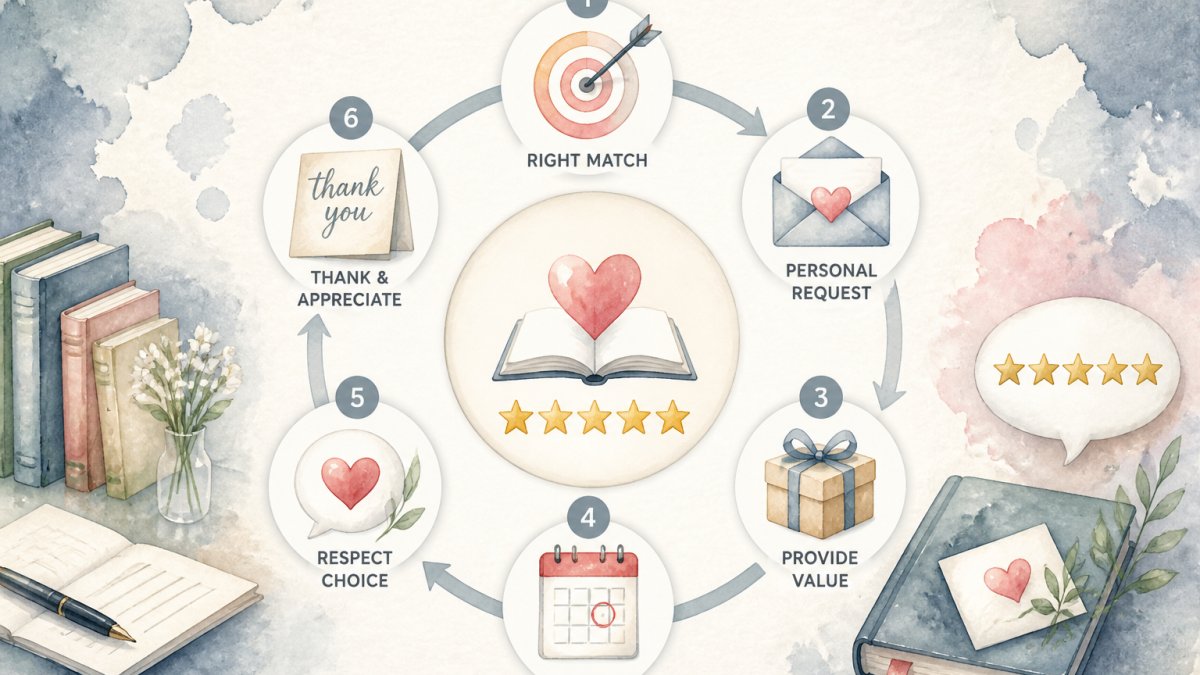
Asking for a review is asking for a favor. The ethical ways to ask for book reviews include making the ask optional, acknowledging that honest reviews matter more than five-star reviews, and giving readers an easy out. Don't ask while someone is still reading, wait until they've finished. Avoid transactional language like "I'll give you a free book if you leave a review." Instead, say "I'd love to hear what you thought."
Book Review Request Email Templates
Personalization and timing make templates work. Most people don't leave reviews because they don't think to do it or feel their opinion doesn't matter. Your email needs to remove those barriers.
Understanding Your Reviewer
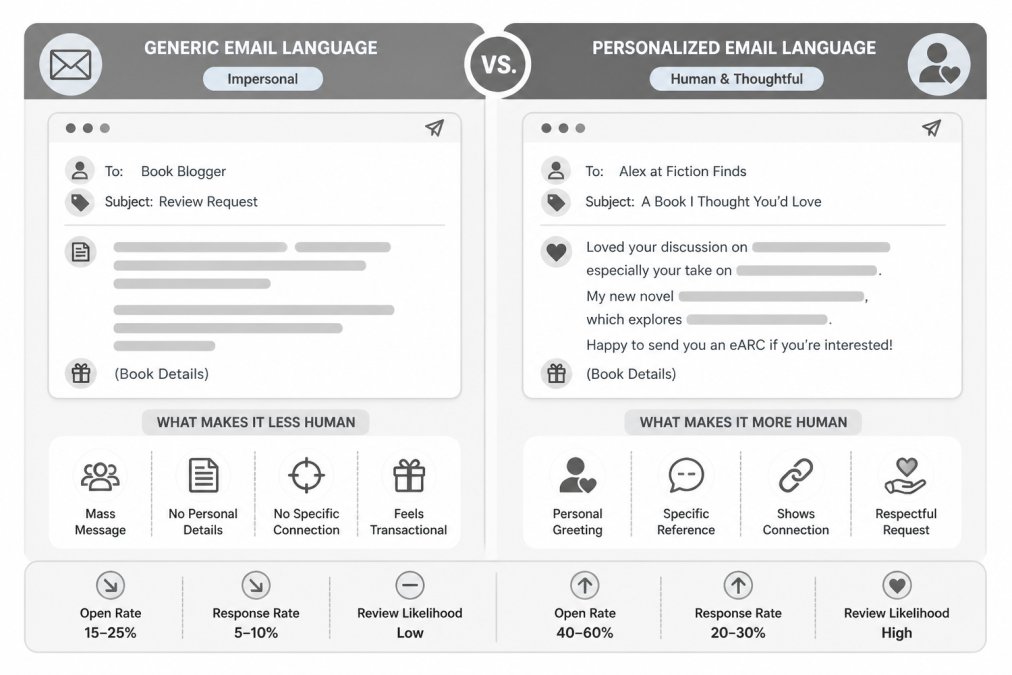
Ask yourself: Who is this person and what's their relationship to you? Readers who bought your book are your warmest audience. Book club members have discussed your book and likely have detailed thoughts. Cold outreach to bloggers needs different framing than a thank-you to someone who already bought your book.
Template 1: For Readers Who Already Bought Your Book
Subject: Would love to hear what you thought
Hi [Name],
I'd love to know what you thought of [Book Title]. If you enjoyed it (or even if you didn't), a review on [Amazon/Goodreads] would mean a lot. Honest reviews help other readers find books that are right for them.
Here's the link: [DIRECT LINK]
No pressure if you don't have time.
[Your Name]
Template 2: For Book Club Members or Reader Groups
Subject: [Book Title] discussion, would love to join
Hi [Club Name/Leader Name],
I'm thrilled that [Book Club Name] selected [Book Title]. I'd love to be part of your discussion if you're open to it. I can answer questions, provide a discussion guide, or just listen in.
After your discussion, if members feel like sharing their thoughts on Goodreads or Amazon, I'd be grateful. But the main thing is that you have a great conversation.
Let me know how I can help.
[Your Name]
Template 3: For Email Subscribers or Followers (Pre-Release)
Subject: Early access to [Book Title], your thoughts?
Hi [Name],
I'm releasing [Book Title] on [Date] and wanted to give you early access. If you read it and feel like sharing your honest thoughts on Goodreads or Amazon, that would be amazing. But there's no expectation.
Download your copy here: [LINK]
Thanks for being part of this journey.
[Your Name]
Template 4: For Cold Outreach to Reviewers or Bloggers
Subject: [Book Title] for review, [Genre] readers might love this
Hi [Name],
I've been following your [blog/reviews/content], and I think [Book Title] aligns with what your audience cares about. [2-3 sentences about why it's relevant to their readers.]
I'd love to send you an advance copy if you're interested. No pressure if it's not the right fit.
Here's more info: [LINK]
[Your Name]
What NOT to Say in Any Template
- "I'll give you a free book if you leave a review" (transactional, violates platform policies)
- "I'd really appreciate a five-star review" (asking for a specific rating is against platform rules)
- "Please leave a review ASAP" (creates pressure, makes readers feel used)
- "My book needs reviews to succeed" (makes it about your needs, not their choice)
- "Other readers loved this" (sounds like you're hinting they should too)
The Personalization That Actually Matters
Templates are starting points. What makes them work is specificity.
Instead of: "I think you'll enjoy this book." Try: "I remembered you mentioning you love [specific theme/character type]. This book explores that in a way I think you'll appreciate."
Instead of: "A review would mean a lot." Try: "If you read it, I'd genuinely love to hear what resonated with you, or what didn't."
Instead of: "Thanks for reading." Try: "Thanks for taking a chance on my work."
The difference is small, but it signals that you see them as a person, not a review slot.
Finding Book Clubs for Reviews and Building Relationships
Book clubs are goldmines for honest reviews. When a book club selects your book, you're reaching multiple readers who tend to leave thoughtful, detailed reviews because they've discussed the book together. Find clubs on Goodreads, Facebook, and specialized directories that match your genre. Research the club, send a personalized message explaining why your book fits their interests, and offer value (discussion guide, Q&A, or virtual visit). When a club selects your book, show up and engage with their members. Building relationships with book club leaders matters more than any single review.
How to Get More Book Reviews on Amazon
Amazon reviews carry weight in the algorithm. You can't force reviews, but you can make it easy for people who want to leave them. Send a follow-up email to people who bought your book about a week after purchase. Include a direct link to the review page and acknowledge that you want honest feedback, not just five-star reviews. Readers respect authors who ask for honest reviews and are more likely to leave one because they feel trusted.
Avoiding Common Pitfalls: Review Exchange and Incentive Mistakes
This is where many authors go wrong. The shortcuts feel tempting, but they backfire.
Review exchanges happen when authors agree to review each other's books in exchange for reviews. It sounds harmless.
The same goes for paying for reviews or offering incentives. Amazon explicitly prohibits this. They have systems to detect when reviews come from incentivized sources.
Incentivized reviews also damage your credibility. Readers can often tell when reviews feel fake or forced.
The other common mistake: asking friends and family to leave reviews without disclosure. If they received a free copy, they need to say so.
Here's what to avoid:
- Review exchange pools or swaps
- Paying for reviews or review services
- Asking people to leave reviews without disclosing their relationship to you
- Using multiple accounts to leave reviews
- Asking for five-star reviews specifically (ask for honest reviews instead)
The platforms are sophisticated. They track patterns. They compare review timing and language across accounts. Getting caught costs you far more than any short-term gain from fake reviews.
Maintaining Professional Boundaries with Reviewers
Respect the reviewer's independence. Once someone agrees to review your book, your job is to stay out of their way.
Don't follow up asking if they've finished. Don't hint at what rating you hope for. Don't get defensive if they leave a negative review.
If someone leaves a negative review, resist the urge to respond.
The exception: if the review contains a factual error about your book, a brief, professional correction is appropriate. But even then, keep it short and kind.
Professional boundaries also mean respecting confidentiality.
When you treat reviewers with respect and professionalism, they're more likely to recommend your book to others.
ReaderReach helps authors navigate this process by connecting them with book clubs and reader communities that are actively looking for new books.
Frequently Asked Questions
What should I include in a polite book review request email?
Keep it short and personal: introduce yourself, explain why you're reaching out to them specifically, mention your book briefly, and make it easy to say no. Include a direct link to where they can read or review your book. Avoid sounding desperate or making demands. A genuine, one-paragraph email works better than a long pitch. Always respect their time and decision.
Is it ethical to offer incentives for book reviews?
Offering free copies to genuine readers is acceptable. However, paying for reviews or requiring positive feedback in exchange for anything violates most platform policies and damages review integrity. Amazon and Goodreads specifically prohibit incentivized reviews. Instead, focus on finding readers who genuinely care about your genre and building authentic relationships with them.
How do I find genuine readers to review my book?
Start by identifying book clubs, reading communities, and reader groups that match your genre. Look for active members who regularly post reviews and engage with books like yours. Personal recommendations from friends and family work well too. Focus on quality over quantity: one thoughtful review from a real reader beats dozens of fake ones. Building relationships first, before asking for reviews, increases your chances of honest feedback.
What's the difference between a review request and a review exchange?
A review request is asking someone to read and honestly review your book. A review exchange means you agree to review their book in exchange for them reviewing yours. While exchanges can feel fair, they often lead to inflated ratings and violate platform policies because reviewers may not be objective. Ethical review requests focus on finding readers genuinely interested in your genre, without expecting anything in return.
The bottom line: Asking for reviews ethically takes more time than shortcuts, but it builds real relationships and protects your reputation. Readers respect honesty. Platforms reward it. And your book gets the kind of reviews that actually matter, genuine, thoughtful, and honest.